Reports
The Economic Contribution of Rimbunan Hijau's Forestry Operations in Papua New Guinea
The Economic Importance of the Forestry Industry to Papua New Guinea
Whatever it takes - Greenpeace's anti-forestry campaign in Papua New Guinea
Masalai i Tokaut and Rimbunan Hijau Watch: A political and deceptive campaign against Rimbunan Hijau
Background papers
The World Bank and forestry in PNG
Rimbunan Hijau - About the company
E-newsletter
June 2009
April 2009
March 2009
February 2009
December 2008
October 2008
Special Edition, September 2008
August 2008
May 2008
18 April 2008
February 2008
December 2007
October 2007
August 2007
July 2007
May 2007
April 2007
March 2007
8 February 2007
November 2006
21 September 2006
13 September 2006
August 2006
July 2006
Relevant links


Greenpeace actions risk fanning anti-Chinese sentiment - reports in Malaysia

June 2009: The recent anti-Asian riots in PNG reflect how sensitive race issues are in the country. There are regular flare-ups in this society in which the pressures associated with social change, high population growth and international migration are constant. Untimely media commentary in Malaysia that the activities of Malaysian forestry companies in the past may have contributed to this general situation brought an instant response from the PNG Forest Industries Association which has been extensively reported in the PNG and Malaysian media. More...

PNG and climate change: US$2.4m in funding

June 2009: Details of funding under an international programme to prepare Papua New Guinea to participate in the REDD forestry programme have been announced. Sponsored by the UN Environment Programme (UNEP), the UN Development Programme (UNDP) and the FAO, the programme will provide approximately US$2.4m over two years. More...

FSC Australia seeks charitable status

June 2009: Despite the Forest Stewardship Council's (FSC) bluster, there are regular reports in the Australian forest industry that the FSC just cannot get operational. Its coverage is small (from its publicity one would not think so) and it has signally failed to establish a national Australian SFM standard. There are also signs that it is short of money. More...

Greenpeace's timber policies questionable

June 2009: To coincide with the Australia-PNG Ministerial talks in Brisbane in June, Greenpeace renewed its call to ban imports of 'illegal' timber from PNG. Its spokesman was quoted as stating that Greenpeace wanted imported timber to be certified as legal and banned it if wasn't. This statement is redolent of Greenpeace's continuous claims that the timber on the ship that it seized illegally in the Gulf of Papua last September was illegal - even after it was demonstrated on the public record that this was not the case. The Greenpeace claim implies that it supports trade in forestry. But Greenpeace supports something quite different. More...

G20 commitment to avoid trade barriers ignored on timber trade

April 2009: As part of the global strategy to manage the global recession, G20 leaders have twice called on all countries to avoid erecting trade barriers. When it comes to timber and tropical products, it appears Western authorities are ignoring this. More...

UNFCCC approach to forestry improving

April 2009: While the recent United Nations Framework Convention on Climate Change (UNFCCC) talks in Bonn, Germany, revealed that among industrialized nations there has still been very little progress on recognizing the full role forestry can play as a low-cost means of reducing greenhouse gas emissions, at least there is a move away from the Greenpeace and WWF position that the Climate Change Convention should be used as an anti-forestry tool. More...

Preparing for carbon credits in PNG

April 2009: The PNG Office of Climate Change has initiated work to establish a basis for generating carbon credits in PNG. This was originally sponsored by the World Bank and Finland in the expectation that the UNFCCC negotiations would result in agreement on a global system for emissions trading. It is now accepted that the Copenhagen Climate Change conference in December will not settle on a new global agreement, but simply lay down a framework. More...

US mobilising on global forest policy

March 2009: The United States is re-emerging as a significant player in global forest policy. President Obama has already declared that he wishes to "make trade an important policy tool for achieving progress on national energy and environmental goals" in his Trade Policy Agenda for 2009. More...

World Bank "REDD"ying PNG

March 2009: There are news reports that a World Bank team has visited PNG to assist with preparing PNG to receive funding to participate in proposed actions as part of the climate change negotiations to Reduce Emissions from Deforestation and Degradation (REDD). The original plan was that carbon credits would be created by ceasing deforestation and then sold on world markets. This would not offer PNG much. More...

New conservation area in PNG

March 2009: The Papua New Guinean Government has declared a conservation area in Morobe Province. The YUS Conservation Area is named after the Yopno, Uruwa and Som rivers that run through the area. The area covers 76,000 hectares, extending from Morobe's interior mountains to the coast. More...

Illegal logging regulation in Australia?

February 2009: The Rudd Government is currently considering measures on 'illegally logged' timber, in line with an election commitment that was made in 2006. A draft impact assessment on any regulation is expected to be released in March of this year. More...

Green protectionism on the rise

February 2009: With the global financial crisis now gripping the world economy, Green protectionism can be expected to proliferate - and they will hit timber producers in developing countries. Moreover, they will be dressed up as environmental initiatives. More...

PNG closes book on illegal logging claims

December 2008: Papua New Guinea's forest industry moved closer to closing the book on claims that it is a major source of illegal timber with the announcement of PNG's first independent legality verification certificate. The SGS Timber Legality Traceability and Verification (TLTV) certificate was awarded to Saban Enterprises Limited, a subsidiary of Rimbunan Hijau in PNG. The project was the result of collaboration between Saban, SGS - one of the world's leading audit agencies - and the ITTO, which jointly funded the development of the new legality standard for Papua New Guinea. This important development contrasted starkly with a serious blunder by Greenpeace in September. Greenpeace has criticised the SGS legality verification standard (and others) on the usual contrived grounds - lack of independence and poor consultation - revealing once again that its aim is not to curb illegal logging, but to exploit that issue with false claims to advance its campaign to restrict or halt commercial forestry in tropical developing economies. More...

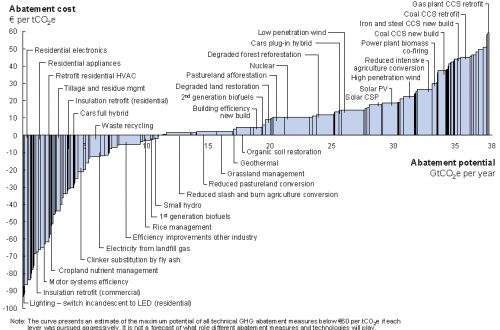
Forestry the easiest way to mitigate emissions

December 2008: US-based NGO World Growth released a report at the recent UN Climate Change Conference in Poznan pointing out how UN research shows that expansion of forestry is the most cost-effective way in which developing countries can mitigate emissions. The report, "Winners All - How Forestry Can Reduce Both Climate Change Emissions and Poverty", is available at www.worldgrowth.org. Click here to download the report.

PNG's REDD proposal published

November 2008: Papua New Guinea's analysis to demonstrate that it is ready to participate in World Bank REDD programmes has been published. Unfortunately, the report draws heavily on recent research by the University of Papua New Guinea (UPNG) which suggests that deforestation rates in PNG were higher than extant assessments and that the commercial forestry industry is a significant driver of deforestation in Papua New Guinea. The methodology in the UPNG study has been severely critiqued by Colin Filer, one of the region's leading forest and resource management experts, and flies in the face of existing data on deforestation in PNG published by the FAO. More...

PNG deforesting?

September-October 2008: Greenpeace continued to repeat its routine allegation that PNG was heavily deforesting and endangering the 'Paradise Forests' when its vessel, The Esperenza, 'Keystone Copped' its way through the Gulf of Papua last month, seizing a vessel it thought belonged to someone else, and alleging it carried illegal timber, which was palpably legal. More...

Garnaut backs off forestry in PNG

30 September 2008: The Garnaut Climate Change Review - Australia's answer to the Stern Report - has changed its view of forests in developing countries as an easy source of carbon credits. More...

Greenpeace gets it wrong: the poor in the Pacific are the victims: commentary by Alan Oxley

9 September 2008: Last week, Greenpeace blundered with a clumsily executed publicity stunt in the Papua Gulf in Papua New Guinea (PNG) in the remote South Pacific. Greenpeace protestors illegally boarded a ship, claiming that the timber it was transporting to China was illegally logged by long-standing Greenpeace target, Rimbunan Hijau, the largest forest business in PNG. More...

UNFCCC still trying to see REDD

August 2008: Forestry's role in climate change was up for discussion at the UNFCCC talks in Accra, Ghana in August. On the table at a workshop meeting was 'Reducing Emissions from Deforestation in Developing Countries---Approaches to Stimulate Action'. The talks demonstrated that what seems like a straightforward concept---compensating developing countries for avoiding deforestation---is proving exceedingly difficult. More...

SGS criticises Greenpeace assessment of legal verification

6 June 2008: SGS, one of the world's most respected inspection organisations, has criticised a Greenpeace report released in January that purports to be a technical assessment of international legality verification systems as unprofessional and not transparent. More...

NZ announces illegal logging measures

27 May 2008: The New Zealand Government has announced it will adopt measures to address the issue of illegally-logged wood products. New Zealand Forestry Minister Jim Anderton announced that international action will include financial mechanisms to reduce deforestation in developing countries, research, and government engagement with key consumer countries that are considered a risk for the export to New Zealand of illegally-logged wood. More...

Greenpeace moves attacks to Solomons

25 April 2008: Greenpeace's failed campaign against the commercial forestry industry in Papua New Guinea has now shifted back to the Solomon Islands. More...

Forestry equals climate solution: Gabon, Indonesia

22 April 2008: Submissions by Gabon and Indonesia to the UNFCCC on reduced emissions from deforestation and degradation (REDD) indicate support for carbon absorption in sustainably managed commercial forests. More...

AIC report on illegal logging fails organisation's own professional standards

16 April 2008: The PNG Forest Industries Association has complained to the Australian Institute of Criminology (AIC), an Australian Government legal research agency, that a recent report on imports of "illegal timber" fails the Institute's charter obligation to produce impartial and high standard research. More...

PNG industry to invest in silviculture

17 March 2008: Rimbunan Hijau, the largest forestry company in PNG has announced that it will make further substantial investments in silviculture and reforestation in Papua New Guinea, in line with the Australia-PNG Forest Carbon Partnership Agreement. More...

WWF and Flannery promote climate change forestry experiment in PNG

30 January 2008: WWF and Australian climate change author Tim Flannery have made a joint submission to the Australian Garnaut Climate Change Review, proposing that PNG villagers in remote areas sell carbon or biodiversity credits via Internet auction site eBay to conserve their forest areas. They will apparently do this using a combination of technologies. The concept is that the rural poor would benefit more from trading carbon in trees than from harvesting them. PNG's rural poor need more income. However, the scheme is likely to decrease not increase income. More...

Greenpeace assessment of legal verification systems - who benefits?

30 January 2008: In a new "assessment" of systems to verify the legality of forest logging, Greenpeace has advanced a set of criteria which requires a "time-bound commitment" to adopting FSC-certified forestry management. The report criticises many other verification systems for lack of transparency. Greenpeace fails to mention in the report that it has a proprietary interest in FSC as a founding member and that it is a member of one of FSC's governing bodies. More...

Tropical forests - what crisis?

8 January 2008: A new study from the University of Leeds challenges claims of a global crisis in tropical forestry. The study, published in the US-based National Academy of Sciences, has found that evidence of a decline in tropical forest area is unclear. "The picture is far more complicated than previously thought", said Dr Alan Grainger, the study's author and one of the world's leading authorities on deforestation. "If there is no long-term net decline in global forestry, it suggests that deforestation is being accompanied by a lot of natural reforestation that we have not spotted", he said. More...

UNFF agreement adopted

17 December 2007: The UN General Assembly has adopted the UN Forum on Forests Non-Legally Binding Instrument on All Types of Forests (NLBI), eight months after the agreement was reached in April 2007. The agreement on international forest policy and cooperation calls for greater international cooperation and national action to reduce deforestation, reverse the loss of forest cover, prevent forest degradation, promote sustainable livelihoods and reduce poverty for all forest-dependent peoples. More...

Bali Roundup

16 December 2007: A number of key developments related to forestry took place at the United Nations Framework Convention on Climate Change (UNFCCC) Conference in Bali, Indonesia, from 3 to 14 December. More...

  • UNFCCC - role of sustainable forestry as tool to reduce carbon emissions recognised
    Forestry was a hot topic at the UNFCCC meeting. There was a keen awareness among Green NGOs that if they couldn't walk away with commitments to binding emissions cuts from developed nations, they could try to force their anti-forestry agenda under the Convention. More...

  • World Bank - fails to recognise sustainable forestry
    The World Bank wasted another opportunity to take positive action on forestry, growth and climate change, with the launch of its Forest Carbon Partnership Facility (FCPF) at the UNFCCC Conference. The Fund looks like an offer of money to developing countries to adopt Bank policies on deforestation. More...

  • Indonesia
    Host nation Indonesia made some major announcements regarding forestry and climate change at the UNFCCC conference, including its intention to select four forestry projects for the World Bank's proposed Reduced Emissions from Deforestation and Degradation (REDD) scheme, and the launch of the 'Orangutan Conservation Strategy and Action Plan'. In addition the Indonesian province of Papua announced that it will review all forestry operations in the province, and signed a number of agreements with carbon investment companies. More...

IFC withdraws from Olam

8 December 2007: In another disappointing development in World Bank forest policy, the International Finance Corporation (IFC), the investment arm of the World Bank, has divested its 3.4 per cent stake in Olam, a Singapore-based company with holdings in the Democratic Republic of Congo (DRC). Olam had been under repeated attack from Greenpeace over its involvement in the DRC, despite Olam holding just less than 1 per cent of all forestry concessions allocated by the DRC Government (which were subsequently handed back earlier in 2007) and having never cut down a single tree in the DRC. The company issued a statement strenuously denying Greenpeace's charges. More...

UK DFID as anti-forestry advocate

29 November 2007: The UK's Department for International Development (DFID) has employed the advocacy tactics of Green NGOs with two booklets on illegal logging in Indonesia, Ghana and Cameroon. The DFID publications are 'policy lite', written in a journalistic style with no sourcing of data and information. Aid agencies are usually more responsible, with reports backed up with sourced statistics, serious analysis and solid policy recommendations. More...

ITTO funds PNG governance project

10 November 2007: The International Tropical Timber Organisation (ITTO) has funded a governance project in PNG to the tune of almost US$500,000. The project aims to enhance forest law enforcement in PNG and support sustainable forest management activities. Forest law enforcement in PNG has been heavily criticised by some NGOs operating in the area. More...

Greens maintain unscrupulous attacks on PNG, ANZ

17 October 2007: Australian and New Zealand Greens campaigning against the proposed Gunns pulp mill in Tasmania are using the PNG forestry industry as a pawn in their campaign. The campaign is attacking Gunns' banker, ANZ, but has unscrupulously dragged another ANZ client, Rimbunan Hijau, into the campaign. More...

Forestry plays role in reducing poverty in rural PNG

10 October 2007: A new report reveals that private-sector forestry investments play a vital role in reducing poverty in rural areas in Papua New Guinea. The report has found that forestry contributes significantly to economic and social development in rural areas. More...

Greenpeace tactics hold little sway in developing countries

9 October 2007: Greenpeace has ignored the failure of its PNG-based Global Forest Rescue Station and established a 'Forest Defenders Camp' in Riau. In PNG, the Global Forest Rescue Station was designed to promote subsistence eco-forestry. More...

NZ Greens attempt to derail developing economies

20 August 2007: The Papua New Guinea forest industry has again been targeted by environmental campaigners who are using action against financial institutions in their anti-forestry campaigns. The New Zealand Greens Party and the New Zealand Financial Sector Workers' Union (FINSEC) have urged a misguided consumer boycott against ANZ Bank. More...

NZ illegal logging report suspicious

7 August 2007: The New Zealand Government has released a report that says illegal logging is costing the New Zealand timber industry hundreds of millions of dollars, specifically pointing the finger at Asia-Pacific developing countries. However, the report bases some of its research on unsubstantiated claims by NGOs such as Greenpeace. More...

Climate change to dominate forest policy

27 July 2007: The High Level Meeting on Forests and Climate in Sydney, Australia, indicated further shifts in towards climate change taking hold of international forest policy. The Australian Government made three significant commitments to forestry and climate change, all of which will have an impact on forestry policy in the Asia-Pacific region. More...

ITTO funds Pilot Project in PNG

30 June 2007: The ITTO will jointly fund a Timber Legality and Traceability Verification (TLTV) pilot system with Saban Enterprises Limited, a PNG-based timber company and subsidiary of Rimbunan Hijau (PNG), demonstrating a commitment to legal logging in PNG from both the private sector and the international community. The voluntary scheme is designed to strengthen forestry law governance and enforcement on global timber markets. More...

Yale mixes it in the global forestry debate

30 June 2007: Two recent interventions suggest that members of the Yale Center for Environmental Policy and Law, an environmental institution that carries significant international influence, are becoming activists in the global forestry debate. PNG has met a general rating of sustainability of forestry in developing countries published by the Center in 2005 and 2006. Research by a member of the Yale Center was used as part of a campaign to pressure financial institutions not to finance timber companies. More...

Malaysia and Indonesia defend palm oil

11 June 2007: The governments of Malaysia and Indonesia, the world's two largest producers of palm oil, have launched a campaign to internationally defend their countries' palm oil industries which have come under increasing attack from NGOs around the world. Several environmental NGOs have claimed that a combination of palm oil plantations for biofuels, as well as illegal logging, is causing damage to Indonesia's rainforests. More...

NGOs keep up unethical campaigns against developing countries

7 May 2007: Forestry in developing countries has come under recent attack, once again, from anti-development NGOs on opposite sides of the globe. The Australian Conservation Foundation (ACF) has launched a second attack on the ANZ banking group last month, pressuring it to withhold banking services from one of its clients, Rimbunan Hijau (RH), a timber producer in Papua New Guinea. The attacks on the timber industry in PNG, the bank and the timber importer have come just weeks after the PNG forestry industry announced a commitment to a legality verification scheme through Swiss-based firm SGS. Greenpeace has also launched an attack on forestry in the Democratic Republic of Congo. More...

Indonesian provinces to limit logging

26 April 2007: Governors of three of Indonesia's provinces have committed to measures which limit carbon emissions and logging in the provinces' tropical rainforests. The agreement between the provincial governors of Aceh, Papua and West Papua was reached at a World Bank sponsored meeting on climate change in Nusa Dua in Bali on 26 April. The main aims of the agreement are to mitigate the impact of climate change and address deforestation. The governors expressed a determination to implement policies which are environmentally friendly, and pursue sustainable development and reduction of greenhouse gas emissions. More...

China develops guidelines for sustainable plantations

15 April 2007: The ITTO has reported that China has developed sustainable forestry guidelines for plantation management. The guidelines are yet to be implemented, but according to an ITTO report, the State Forest Administration (SFA) is currently in the process of selecting timber companies to implement the guidelines. More...

EU suspends imports of ramin from Malaysia

2 April 2007: The EU has suspended imports of the timber ramin from all Malaysian territories. The EU Scientific Review Group on Trade in Flora and Fauna made the decision that ramin imports be suspended in mid-April. More...

Australia commits $200 million to forestry in developing world

28 March 2007: The Australian Government has announced a practical approach to address climate change in the form of the Global Initiative on Forests and Climate. The initiative commits A$200 million to promote sustainable forestry to preserve forestry sinks in developing countries, including PNG. More...

PNG moves towards legality verification

27 March 2007: Papua New Guinean forestry has taken a step towards legality verification. The PNG Forest Industry Association (PNGFIA) has announced that it is now working with Swiss firm SGS (Societe Generale du Surveillance), one of the world's most credible inspection and verification auditors. More...

State of Asia and the Pacific's forests improving

13 March 07: The UN Food and Agriculture Organisation's (FAO) State of the World's Forests report reveals that the world's forests are not on the verge of catastrophe. The report, released on March 13, highlights the reforestation that is currently taking place around the world. A total of 57 countries reported a net increase in total forest area in the period from 2000 to 2005. More...

SGS shows PNG timber Is legal

15 February 07: In a speech at a recent illegal logging seminar funded by the UK's Department for International Development (DFID), Papua New Guinea's Trade Minister Paul Tiensten disputed allegations by environmental NGOs that commercial logging in PNG is illegal. More...

Rimbunan Hijau launches a major HIV/AIDS initiative in PNG

29 January 2007: Rimbunan Hijau PNG, a major commercial forestry operator in Papua New Guinea, has announced that it will contribute K600,000 (A$278,000) to the national fight against HIV/AIDS. The funds (granted through the RH Foundation) will be delivered over a three-year period. More...

Claims of log smuggling in PNG unfounded

15 November 2006: www.illegal-logging.info, a website managed by Chatham House and funded by UK's Department for International Development (DFID), has published an article which dispels some of the myths regarding illegal logging in Papua New Guinea. Written by Kwame Asumadu (an independent consultant based in Australia), the article outlines the independent monitoring system of PNG log exports developed and implemented by Société General de Surveillance (SGS). More...

Australian government refuses NGO calls for tropical timber ban

2 November 2006: In a draft policy paper, the Australian government has produced a list of measures it is planning to undertake to tackle the issue of illegal logging. Despite the pressure from green NGOs such as Greenpeace, the discussion paper rules out banning imports of tropical timber from countries such as Papua New Guinea (PNG) and the Solomon Islands. Instead, it focuses on voluntary industry measures, and supports a government review of forest certification schemes. More...

Australian Treasury rejects NGO allegations against ANZ

20 October 2006: The Australian Treasury has ruled that ANZ has no case to answer in an NGO complaint which asserted that, by having financial links to Rimbunan Hijau, ANZ is breaching various OECD Guidelines. The complaint was lodged by a consortium of NGOs (including the Australian Conservation Foundation, CELCOR and Human Rights Council of Australia), and made references to 'respect of human rights' and 'contribution to economic, social and environmental progress'. More...

World Bank allegations against PNG lacking evidence

16 September 2006: The World Bank has published Strengthening Forest Law Enforcement and Governance - Addressing a Systemic Constraint to Sustainable Development, a report which estimates the effects of illegal logging in developing countries. The report claims that an estimated 70 per cent of Papua New Guinea's total forest production is illegal, but the claim lacks evidence. More...

Greenpeace criticised in The Australian

16 September 2006: The Australian has published "A skewed vision from team green", an article by Alan Oxley on commercial forestry in Papua New Guinea. The article exposes to the lack of evidence supporting the claims of human rights abuses in the industry, made in the report recently released by CELCOR and Australian Conservation Foundation (ACF). It also points to the need for forestry companies operating in remote areas to call in police forces to keep order, refuting CELCOR-ACF insinuations that forestry companies are responsible for distribution of arms throughout PNG. More...

Greenpeace and WWF respond to ITS Global report

August 2006: Greenpeace International and WWF South Pacific have posted separate responses to Whatever it takes: Greenpeace's anti-forestry campaign in Papua New Guinea, a report by ITS Global. Greenpeace has challenged the independence of the report, citing the fact that the report was commissioned and paid for by Rimbunan Hijau. It also disputes the claim that its policies impede development in PNG, and maintains the claims of illegality and human rights abuses in the PNG forest industry. To support these allegations, Greenpeace produces a list of sources used in its previous reports (which were dealt with by ITS Global); no new evidence is provided. More...

NGOs target ANZ for its association with Rimbunan Hijau

23 August 2006: A five-member coalition of Australian and PNG NGOs has filed a formal complaint to the Organisation for Economic Cooperation and Development (OECD) against the ANZ Bank over the latter's relationship with Rimbunan Hijau. ANZ is accused of being complicit in the alleged environmental and social damage caused by RH, thus breaching OECD Guidelines for Multinational Enterprises. The claims largely rely on evidence discredited by ITS Global. More...

PNG forest industry abusing human rights, says AFC

7 August 2006: The Australian Conservation Foundation (ACF) has produced a report which accuses the commercial forestry sector in Papua New Guinea of causing 'spiralling abuse of civil, political, economic, social and cultural rights'. The report, Bulldozing progress: human rights abuses and corruption in Papua New Guinea's large scale logging industry, recycles material from papers by Greenpeace attacking the PNG forestry sector. More...

New report highlights the importance of commercial forestry in PNG

26 July 2006: A new report has found that commercial forestry is a consistent contributor to growth in Papua New Guinea and could play a larger role in development in the future. The Economic Importance of the Forestry Industry to Papua New Guinea, produced by ITS Global, marks a first attempt to estimate the economic value of the infrastructure created by commercial forestry in PNG.

The findings contradict claims by Greenpeace and other Green NGOs that commercial forestry in PNG is economically unviable and provides little economic value. The report found that the industry employs 10,000 people, contributes 5 per cent to GDP and a quarter of a million dollars each year in exports. Export taxes on logs account for 3 to 6 per cent of all tax.

At the regional level, the impact of the industry includes the provision of roads, air fields and services, wharves, schools and medical clinics for the local populace. A case study of Western Province indicated the industry doubles the amount of infrastructure provided by the provincial government. The report also found that the industry could contribute more if property rights, taxation and institutional arrangements and economic policies were improved. The study provided evidence that eco-forestry (promoted by Greenpeace as a replacement for commercial forestry) is currently commercially unviable in PNG.

The report was commissioned by Rimbunan Hijau (PNG) Group, the largest forestry operator in PNG, to assess the current and potential economic significance of forestry in Papua New Guinea. To see the report in full, click here.

PNG accused of transfer pricing, but evidence lacking

20 July 2006: A news article in The Australian has accused the Papua New Guinea forest industry of engaging in transfer pricing, resulting in the loss of A$100 million a year in tax revenue for the PNG government. However, the news item fails to provide adequate evidence for the claim, citing only the difference in export prices of timber from PNG, Malaysia and western Africa. Other factors influencing export prices have been ignored, and the allegation of an A$100 million tax revenue loss is referenced to unspecified "industry sources". The PNG Forest Industries Association has denied the claim.

Greenpeace campaign against forestry in PNG laid bare

15 July 2006: ITS Global has released a report which reveals that a campaign run by Greenpeace against Rimbunan Hijau (the largest forestry company in PNG) is baseless. Greenpeace claims that Rimbunan Hijau's logging is illegal and is destroying the environment. It also claims that the company abuses human and labour rights, and is engaged in corruption. None of these claims can be substantiated.

The report, Whatever it takes - Greenpeace's anti-forestry campaign in Papua New Guinea, concludes that Greenpeace's attack on the company is a proxy campaign to replace commercial logging in PNG with eco-forestry and subsistence forestry. If successful, this strategy would cost PNG 10,000 jobs, reduce GDP by 5 per cent and reduce exports by half a billion Kina. The report also points out that PNG's forestry is not in danger of imminent destruction, as Greenpeace contends.

The report notes 'Greenpeace is not interested in developing sustainable commercial forestry or improving the economic welfare of the people of PNG. It has only two interests in PNG: first, to see it used as a model for its own view of how the world should look; and second, to secure a tactical victory to support its global campaign to stop commercial forestry'.

Greenpeace's accusations against the company are made in The Untouchables: Rimbunan Hijau's world of forest crime and political patronage, released in 2004 by Greenpeace International, and Partners in Crime: the UK timber trade, Chinese sweatshops and Malaysian robber barons in Papua New Guinea's rainforest, released by Greenpeace UK in 2005.

ITS Global was commissioned by Rimbunan Hijau to review Greenpeace's claims and assess them. Whatever it takes is an exhaustive and detailed analysis of the claims. To access the full text, click here.

Greenpeace climbs building in protest

12 July 2006: Greenpeace has staged a 12-hour protest on top of the UK government's Cabinet Office building, claiming that the latter is being refurbished using timber from Papua New Guinea. Greenpeace has long asserted that commercial forestry in PNG is illegal. More...

Australian government under criticism from PNGFIA

3 July 2006: Bob Tate, the executive officer of the Papua New Guinea Forest Industries Association (PNGFIA), has condemned the possibility of Australia banning timber imports from PNG. Tate stated that such a move 'will be contributing to loss of jobs, rural development and income generation in rural PNG'. More...

International news
03/09: World Bank supports SFM forestry in Brazil
03/09: FSC under attack from the inside - again
03/09: FAO and Finland support SFM
03/09: WWF boycotts PEFC review
03/09: PEFC endorses Russian certification scheme
03/09: SFM, climate change a priority at World Forestry Week
02/09: FAO: "Deforestation is land use conversion, not harvesting of timber"
01/09: Fierce deforestation debate at the Smithsonian
12/08: Forestry in the spotlight at Poznan
11/08: ITTC holds 44th session
17/10/08: EU to use climate change to push its deforestation agenda
17/10/08: EU announces illegal logging legislation
09/10/08: Norway puts money into forests, climate
06/10/08: FSC: Sues US Government, slammed by Greens
16/09/08: Lacey Act comes under fire
27/7/08: WWF trots out the 'usual suspects' for the EU
21/07/08: SGS-FSC moratorium being beaten up by Greens
14/07/08: World Bank announces REDD recipients
30/5/2008: WWF at CBD - "postcard" theatrics
1/4/2008: Political disputes spell commercial trouble for FSC
4/3/2008: Lao forestry under the green spotlight
24/10/2007: Prince Charles takes anti-development position
2007: Greenpeace unscrupulously attacks certifiers
11/10/2007: World Bank releases Forest Carbon Partnership Fund details
24/9/2007: UN High-Level Event on Climate Change aims high
9/9/2007: APEC leaders make declaration on forests and climate
30/8/2007: Woolworths pressured by NGOs
20/8/2007: Australian forestry gains standard
1/8/2007: Another illegal logging Bill for US Senate
30/06/07: US Congress creates nasty trade and environment linkage
11/06/07: G8 backs World Bank forest carbon plan
07/06/07: Developing countries block anti-forestry moves in CITES
24/05/07: Chinese action on illegal logging
28/04/07: UNFF adopts Non-Legal Binding Instrument
11/04/07: Congo cancels logging rights
22/3/07: Stora Enso, Botnia under attack from Greenpeace
22/3/07: Beware the Equator Principles
15/3/2007: Global demand for certified timber weak
5/3/07: Greenpeace encourages supporters not to think
1/3/07: Germans reject WWF-FSC campaign
12/02/07: Heart of Borneo Initiative signed
9/2/07: A Green attack on the WTO and the UNCED consensus
28/01/07: Germany's government procurement policy to accept FSC and PEFC certification
December 2006: FSC failing to uphold indigenous peoples' rights - WRM
21/12/06: 2011 International Year of Forests - UN
19/12/06: UK Government releases review of forest certification schemes; PEFC and FSC approved
09/11/06: FSC-Watch launched
08/11/06: PEFC publishes requirements for the avoidance of controversial wood
26/10/06: New body to promote Australian timber industry
10/10/06: International forum on government procurement policies produces mixed findings
25/09/06: EU and Malaysia launch formal VPA talks; NGOs sceptical
07/09/06: Drastic measures proposed by Victorian anti-forestry NGOs
August 2006: World Bank creates new challenge for forestry in developing nations
22/08/06: Skill shortage in Australian timber industry due to 'negative propaganda'
05/08/06: Greenpeace targets furniture retailers in Sydney
25/07/06: Greenpeace brokers deal to ban the use of 'illegally' grown soy in the Amazon
19/07/06: NAFI welcomes new toolkit to assess effects of reforestation
18/07/06: Poland and Czech Republic progressing towards PEFC certification
07/07/06: Eight new projects for Tasmanian forestry industry
22/06/06: NAFI dismayed by the decision on sleepers
22/06/06: UN lifts ban on Liberia's timber exports
15/06/06: EU adopts Forest Action Plan